
|
Our laboratory explores research questions at the intersection of neuroscience, physiology, and endocrinology. We are particularly interested in the neural mechanisms linking epilepsy and comorbid reproductive endocrine disorders. Both women and men with temporal lobe epilepsy, the most common form of epilepsy seen in adults, show higher rates of reproductive endocrine disorders in comparison with the general population. Importantly, reproductive endocrine problems can reciprocally impact the severity of epilepsy seen and influence the choice and efficacy of anti-seizure treatments. We aim to understand how temporal lobe seizures impact the hypothalamic control of reproduction, and how altered hypothalamic function reciprocally affects seizure activity and epilepsy severity.
Another area of research in the lab examines the roles of estrogen synthesized within the brain in seizures and epilepsy. Although estrogens, particularly estradiol, are primarily observed to have effects that promote seizure activity, much of the attention has been paid to estrogens from the ovaries. The brain itself, however, is also a source of estradiol in both males and females, and concentrations of estradiol in certain areas of the brain can exceed those observed in the circulation. Our ongoing research is examining the specific roles for brain-derived estradiol (neuroestradiol) in excitability and seizures in mouse models of epilepsy and Alzheimer disease. 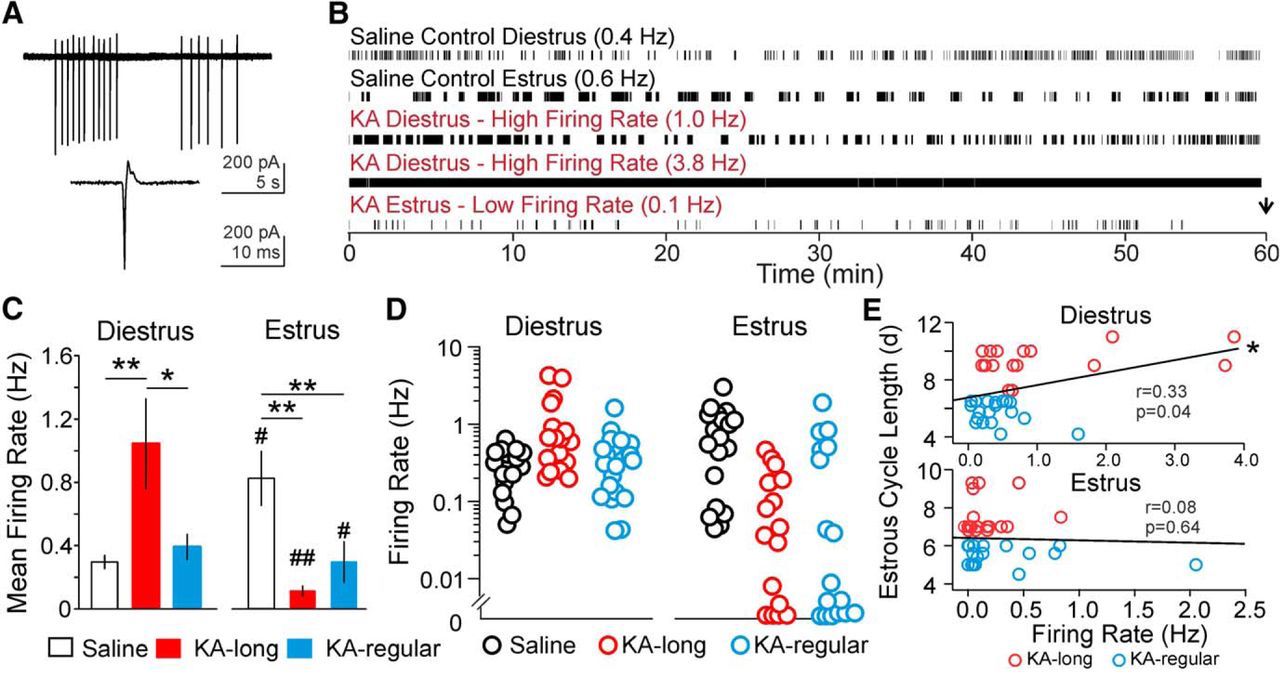
Diestrus vs. estrus shifts in gonadotropin-releasing hormone neuron firing are compromised in the intrahippocampal kainate mouse model of temporal lobe epilepsy. Adapted from Li et al., eNeuro 2018
|
We use a variety of techniques and tools:
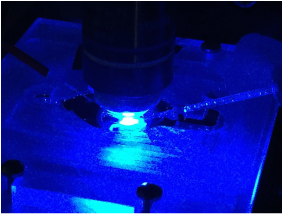
In vitro whole-cell patch clamp recording during application of blue light for optogenetic stimulation
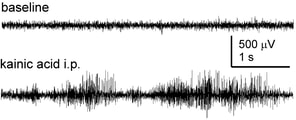
Seizure activity recorded by EEG
|